

Let’s say you’re an only child.
From birth to growing up, you believe this to be true. You have no reason to doubt it. But let’s say in your mid-30s, your parents reveal a dark secret:
“We actually had a stillborn before you. You were supposed to have a brother, but unfortunately he died at birth. Turns out you’re technically our second child.”
This is an odd example (one that happened in my family, so it came to mind first), but it shows something important. You believed you were an only child, but that belief wasn’t actually knowledge. You were wrong, but you had no way of knowing you were wrong.
A less heavy example: the word “plethora.” We use it confidently, but do you know exactly what quantity it means? Over a hundred? A thousand? Most of us think we know what it means, but we’re actually guessing based on context. (For the record, it means “an excessive amount” or “overabundance,” but specifically too much of something.)
These examples show that we often think we know things when we actually don’t.
So how do we know that we know what we know?
Philosophers have debated this question for thousands of years, and I don’t have the answer.
But in my personal opinion, simply knowing that I don’t know everything is humbling, freeing, and worth embracing.
I know that if I touch fire, it’ll burn me because it’s hot. I also know that 1+1=2. These are two different ways of knowing things, but that’s for another day.
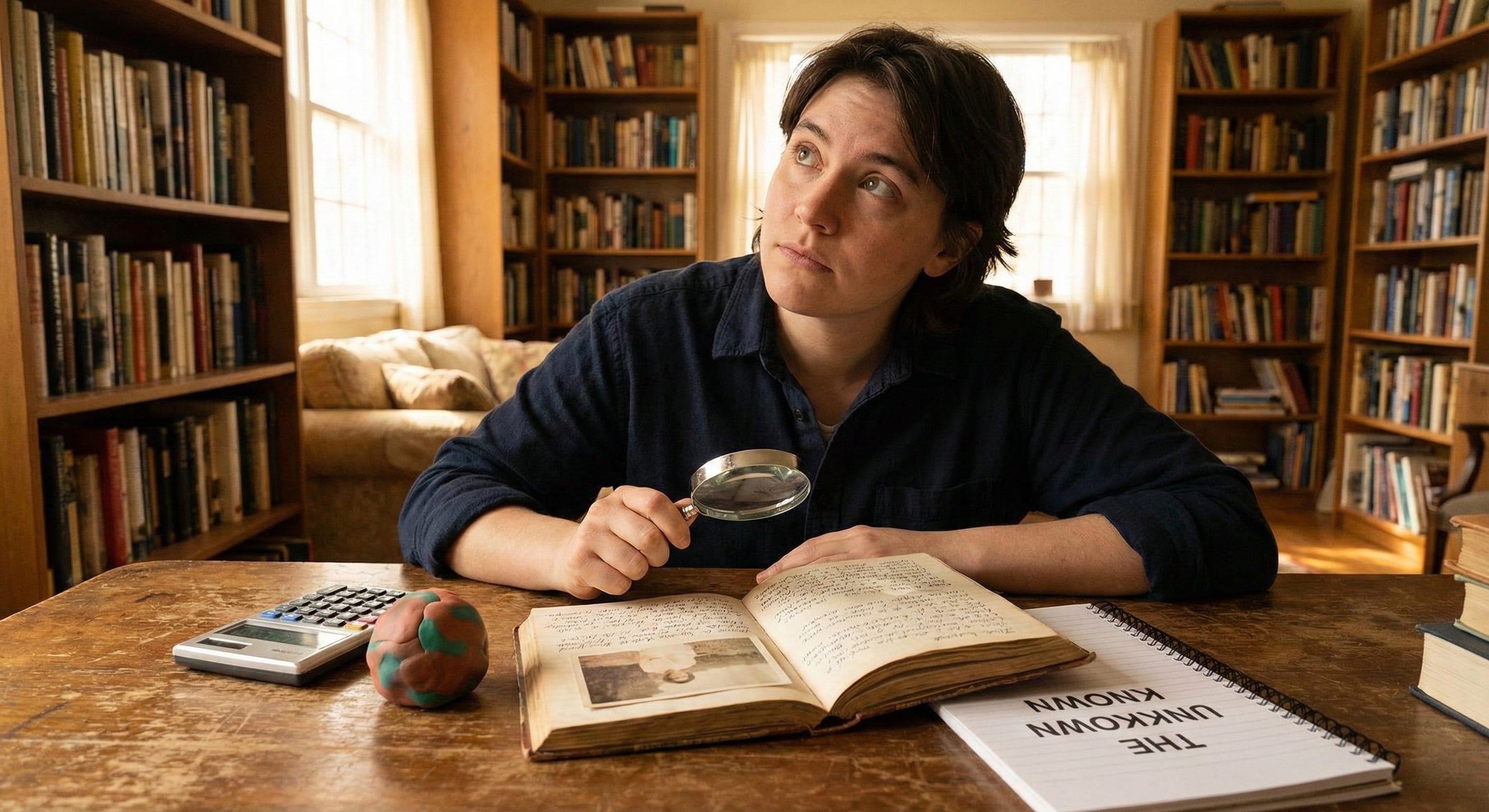
Here’s something interesting though: in arithmetic, 1+1 always equals 2. But if you grab one piece of playdough and another piece of playdough and mush them together, you now have 1 piece of playdough.
Yes, it’s double the size, but it’s still one piece. This shows that how we know things depends on what framework we’re using. Numbers follow different rules than physical objects.
And here’s the thing: not knowing that 1+1 can equal 1 in certain contexts isn’t affecting my life in any way. I still know that 1+1=2 in math, and that’s all I need to know for now. It’s okay that I don’t know what I don’t know. It’s also okay that what I currently know could be wrong, or could change, because most things in life do change. It’s the only constant in life.
Why does all this even matter? What’s the point?
To get you to start thinking that you might not know what you think you know. So when you see something on TikTok that’s presented as correct, be open to the fact that it could be wrong. This even applies to what you hear from other people.
Find the source, get credible information, and discover the truth through your own research instead of blindly believing everything you see, read, or hear.